
Table of Contents
Nepal is witnessing a remarkable rescue effort after workers trapped underground following the devastating August 26 flash floods were found alive more than a week after the disaster. Rescue teams have been working through difficult conditions in the Trishuli River corridor, where floods and debris caused widespread destruction.
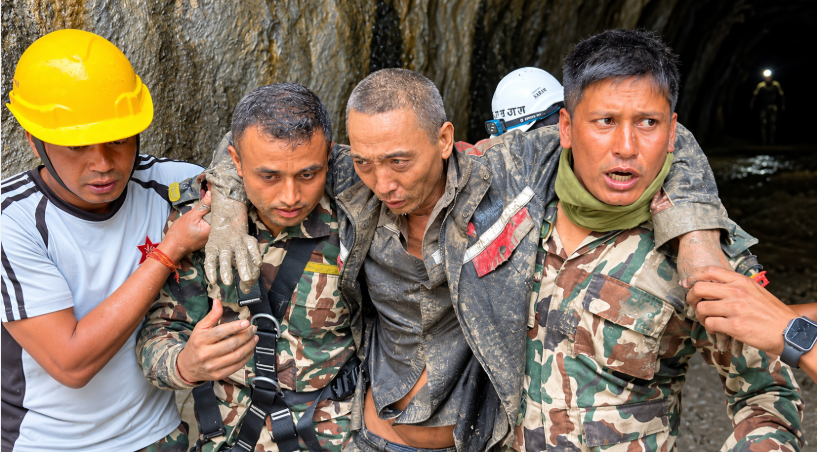
On September 5, a Chinese national was rescued alive from a 225-metre tunnel at the Upper Trishuli-1 Hydropower Project, 10 days after the catastrophic flood. The worker was reportedly exhausted and covered in mud when rescuers brought him out and transported him for medical treatment.
Nepal Flood Rescue: Key Headlines
- Worker rescued after 10 days: A Chinese national was found alive inside a hydropower tunnel.
- 225-metre tunnel searched: Rescue teams reached the trapped worker after an extensive operation.
- Multiple survivors found: Two other people were also rescued from flood-affected areas.
- International teams involved: Nepalese rescuers have received assistance from foreign disaster-response specialists.
- Hundreds remain missing: Search operations continue across severely affected districts.
A Race Against Time
The rescue has become a symbol of hope amid one of Nepal’s worst recent natural disasters. The August 26 floods, believed to have been triggered by a glacier collapse, sent huge amounts of water, rock and mud through Himalayan valleys.
Hydropower projects along the Trishuli River were particularly badly affected. Tunnels became dangerous locations as floodwaters entered construction and power infrastructure, trapping workers underground.

According to reports, rescue teams have been searching several hydropower facilities where workers were believed to be missing. The scale of the operation has required coordination between Nepalese authorities and international specialists from countries including South Korea, China, India and the United States.
Flood Disaster Leaves Major Damage
The rescue developments come as Nepal continues to assess the enormous impact of the floods. More than 1,250 deaths had been reported by September 4, while thousands of people remained missing.
The disaster also caused extensive damage to homes, roads, bridges and hydropower infrastructure. Nepalese authorities have estimated losses at approximately 387.5 billion Nepalese rupees, equivalent to about $2.56 billion. Thousands of homes were destroyed or require reconstruction.
Roads and Infrastructure Under Pressure
Major transport routes have also been affected. Authorities are working to reopen flood-damaged sections of the Prithvi Highway, an important road connecting Kathmandu with other parts of the country.
The damage to hydropower infrastructure could have wider economic consequences because Nepal has been expanding electricity production and exports. Recent flooding has disrupted electricity generation and cross-border power supplies.
Web Story Highlights
Worker rescued alive after 10 days underground.
Chinese national found inside a 225-metre hydropower tunnel.
Rescue teams continue searching flood-hit areas.
Nepal faces thousands of missing-person cases.
Infrastructure damage could affect the economy and energy sector.
The latest rescues provide hope to families still waiting for news about missing relatives. At the same time, Nepal faces a long recovery process involving emergency relief, reconstruction, infrastructure restoration and support for communities devastated by the floods.Nepal is witnessing a remarkable rescue effort after workers trapped underground following the devastating August 26 flash floods were found alive more than a week after the disaster. Rescue teams have been working through difficult conditions in the Trishuli River corridor, where floods and debris caused widespread destruction.
On September 5, a Chinese national was rescued alive from a 225-metre tunnel at the Upper Trishuli-1 Hydropower Project, 10 days after the catastrophic flood. The worker was reportedly exhausted and covered in mud when rescuers brought him out and transported him for medical treatment.
Nepal Flood Rescue: Key Headlines
- Worker rescued after 10 days: A Chinese national was found alive inside a hydropower tunnel.
- 225-metre tunnel searched: Rescue teams reached the trapped worker after an extensive operation.
- Multiple survivors found: Two other people were also rescued from flood-affected areas.
- International teams involved: Nepalese rescuers have received assistance from foreign disaster-response specialists.
- Hundreds remain missing: Search operations continue across severely affected districts.
A Race Against Time
The rescue has become a symbol of hope amid one of Nepal’s worst recent natural disasters. The August 26 floods, believed to have been triggered by a glacier collapse, sent huge amounts of water, rock and mud through Himalayan valleys.
Hydropower projects along the Trishuli River were particularly badly affected. Tunnels became dangerous locations as floodwaters entered construction and power infrastructure, trapping workers underground.
According to reports, rescue teams have been searching several hydropower facilities where workers were believed to be missing. The scale of the operation has required coordination between Nepalese authorities and international specialists from countries including South Korea, China, India and the United States.
Flood Disaster Leaves Major Damage
The rescue developments come as Nepal continues to assess the enormous impact of the floods. More than 1,250 deaths had been reported by September 4, while thousands of people remained missing.
The disaster also caused extensive damage to homes, roads, bridges and hydropower infrastructure. Nepalese authorities have estimated losses at approximately 387.5 billion Nepalese rupees, equivalent to about $2.56 billion. Thousands of homes were destroyed or require reconstruction.
Roads and Infrastructure Under Pressure
Major transport routes have also been affected. Authorities are working to reopen flood-damaged sections of the Prithvi Highway, an important road connecting Kathmandu with other parts of the country.
The damage to hydropower infrastructure could have wider economic consequences because Nepal has been expanding electricity production and exports. Recent flooding has disrupted electricity generation and cross-border power supplies.
Web Story Highlights
Worker rescued alive after 10 days underground.
Chinese national found inside a 225-metre hydropower tunnel.
Rescue teams continue searching flood-hit areas.
Nepal faces thousands of missing-person cases.
Infrastructure damage could affect the economy and energy sector.
The latest rescues provide hope to families still waiting for news about missing relatives. At the same time, Nepal faces a long recovery process involving emergency relief, reconstruction, infrastructure restoration and support for communities devastated by the floods.
