Bangladesh is dealing with a wide range of national problems as September continues, from a worsening dengue outbreak and electricity shortages to banking-sector weaknesses, river erosion, damaged infrastructure and pressure on industrial production.
The country’s financial sector is facing particular scrutiny. According to information presented in parliament, six state-owned banks together hold around Tk1.47 lakh crore in defaulted loans. Janata Bank has the largest share, with non-performing loans exceeding Tk75,000 crore. The scale of these bad loans has intensified concerns about banking governance and the ability of state-owned institutions to recover money.
Major Bangladesh Headlines
- Banking Crisis: State-owned banks are carrying a huge volume of defaulted loans.
- Debt Pressure: Per-capita government debt has reached approximately Tk1.29 lakh.
- Dengue Emergency: Hospital admissions have reached a record daily level.
- Health Services: Hospitals are under increasing pressure from dengue patients.
- Power Shortages: Load shedding is affecting homes, businesses and industries.
- Industrial Crisis: Factories are reducing output because of unreliable gas supplies.
- Weather Risk: Heavy rainfall could affect low-lying and flood-prone areas.
- River Erosion: Major rivers have destroyed large areas of land over recent decades.
- Infrastructure Problems: Roads, bridges and public facilities require greater investment.
- Food Security: Bangladesh is looking for alternative international sources of wheat.
- Telecom Services: All four major operators have been reported as falling short of some service standards.
- Public Safety: Several recent crime and violence cases are receiving national attention.
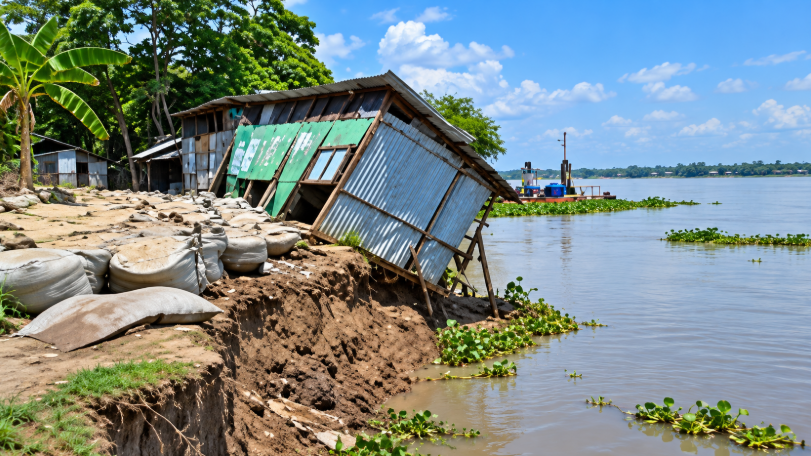
River erosion represents a less visible but serious long-term problem. Government data cited by The Daily Star indicates that the Jamuna, Ganges and Padma river systems have eroded approximately 1,585 square kilometres of land over five decades—more than five times the combined area of Dhaka’s two city corporations.
Weather conditions could add to these pressures. The Meteorological Department has predicted rainfall and thunderstorms across much of the country, with some locations potentially experiencing heavy rainfall. Such conditions can increase the risk of waterlogging, flooding and disruption to transport.

The energy crisis is meanwhile affecting the industrial economy. Reports indicate that businesses including food-processing companies, ceramic factories and steel mills are cutting production because of low gas pressure. Some manufacturers are searching for alternative energy sources to keep factories operating.
Electricity shortages are closely connected to the gas problem. During a recent peak period, national load shedding reached 2,258MW, with Dhaka alone accounting for 759MW. The shortages are creating difficulties for households and businesses and increasing concerns about economic productivity.
The health situation is equally serious. Bangladesh recorded a new daily high of 1,558 dengue hospital admissions, with four additional deaths. The cumulative number of reported dengue cases has risen to 42,590 this year.
Bangladesh is also facing challenges in telecommunications and public infrastructure. Recent reporting says all four telecom operators have fallen short of certain service standards, while damaged roads and bridges continue to affect communities in different parts of the country.
Despite these problems, authorities are pursuing measures aimed at strengthening the economy. The government wants to increase domestic gas production, improve fuel security and attract investment. Bangladesh has also been working to remove international trade barriers and expand export opportunities.
The country’s current situation therefore involves several interconnected challenges. The government’s response to energy shortages, dengue, financial-sector weaknesses and infrastructure problems will be crucial for economic stability and public confidence.
For citizens, the immediate priorities remain reliable electricity, affordable energy, accessible healthcare, safe transportation and protection from extreme weather.
