
Table of Contents
Top Headlines
- Chinese President Xi Jinping arrives in India for the BRICS Summit
- Modi-Xi meeting puts India-China relations in focus
- Xi Jinping’s India visit comes after nearly seven years
- India and China look to strengthen communication and cooperation
- Border issues and LAC peace remain key discussion points
- Trade imbalance and market access may feature in bilateral talks
- India-China economic ties show signs of gradual recovery
- Strategic economic dialogue could give fresh momentum to relations
India-China News Today: Xi Jinping Arrives in New Delhi
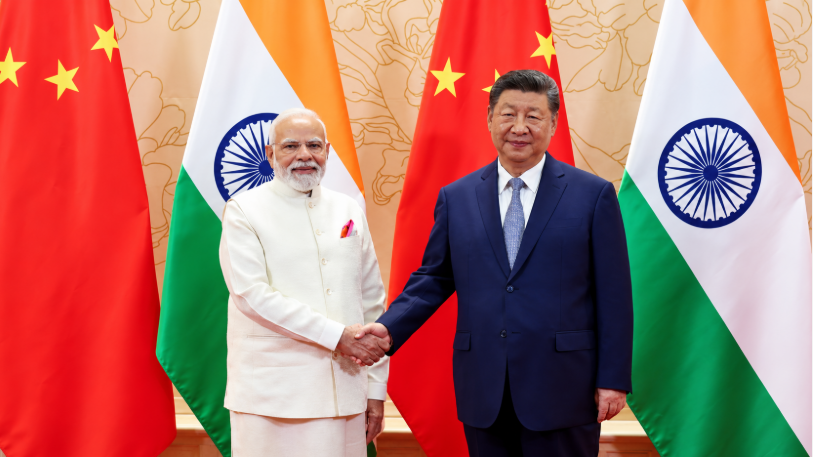
चीनी news today is closely linked to the latest developments in India-China relations as Chinese President Xi Jinping arrives in New Delhi for the 18th BRICS Summit. Xi’s visit, scheduled for September 12-13, 2026, is his first trip to India in nearly seven years and comes at an important stage in the relationship between the two countries.
Prime Minister Narendra Modi and Xi Jinping are expected to hold bilateral discussions on the sidelines of the summit. The meeting is being closely watched because India and China have been gradually working to stabilise relations following years of tension linked to the border situation.
The BRICS gathering also gives both leaders an opportunity to discuss wider global issues, including trade, energy security and geopolitical developments.
Modi-Xi Talks Focus on India-China Relations
The proposed Modi-Xi meeting is expected to focus on several important areas, including the Line of Actual Control, trade, business relations, visas and economic cooperation. Recent diplomatic engagement has created a more positive environment, although major differences remain.

China has indicated that it wants to strengthen communication with India and handle differences through dialogue. Chinese Foreign Ministry spokesperson Mao Ning said Beijing would work with New Delhi to improve communication, expand cooperation and properly manage differences.
For India, maintaining peace and stability along the border remains a major priority. Both sides have continued diplomatic and military-level discussions designed to prevent misunderstandings and reduce the possibility of renewed confrontation.
Border Talks and LAC Stability
The border issue remains one of the most sensitive subjects in India-China relations. In August, the two countries held the 25th round of talks between their Special Representatives, National Security Adviser Ajit Doval and Chinese Foreign Minister Wang Yi.
The talks produced eight points of consensus, including additional military meeting points and new border military hotlines. India and China also agreed to continue discussions on boundary delimitation and border management.
The developments indicate that both countries are trying to establish mechanisms that can help maintain peace along the LAC. However, the boundary question remains unresolved, meaning the process will require continued negotiations.
India-China Trade and Business Relations
Trade is another major part of the current India-China discussion. Bilateral economic activity has recovered despite the political tensions of recent years. Reuters reported that China became India’s largest source of imports in the 2025-26 fiscal year, with goods imports reaching approximately $132 billion.
Recent reporting has also highlighted discussions around a possible strategic economic dialogue. Areas of concern include India’s trade deficit with China, market access, Chinese investment, business visas and restrictions affecting companies from both countries.
For India, the challenge is to expand economic opportunities while maintaining safeguards for sensitive industries and national security. China, meanwhile, has an interest in improving access to India’s large consumer and manufacturing market.
Direct Flights and People-to-People Connections
India-China relations have also seen progress in people-to-people links. Direct passenger flights have resumed, while the Kailash Mansarovar pilgrimage has also been revived. Border trade through designated routes has restarted as part of broader confidence-building efforts.
These measures are important because travel and business links were heavily affected during the period of strained relations. Restoring such connections could help businesses, tourists, students and pilgrims from both countries.
What Xi’s Visit Means for India
Xi Jinping’s visit represents an important diplomatic moment for India and China. The two governments have moved from intense confrontation toward cautious engagement, but several strategic disagreements remain.
The success of the current diplomatic process will depend on whether both sides can make progress on border management while expanding practical cooperation in trade, travel and economic activity.
For India, the immediate focus will be on maintaining border peace, protecting strategic interests and creating greater access for Indian businesses in the Chinese market.
