
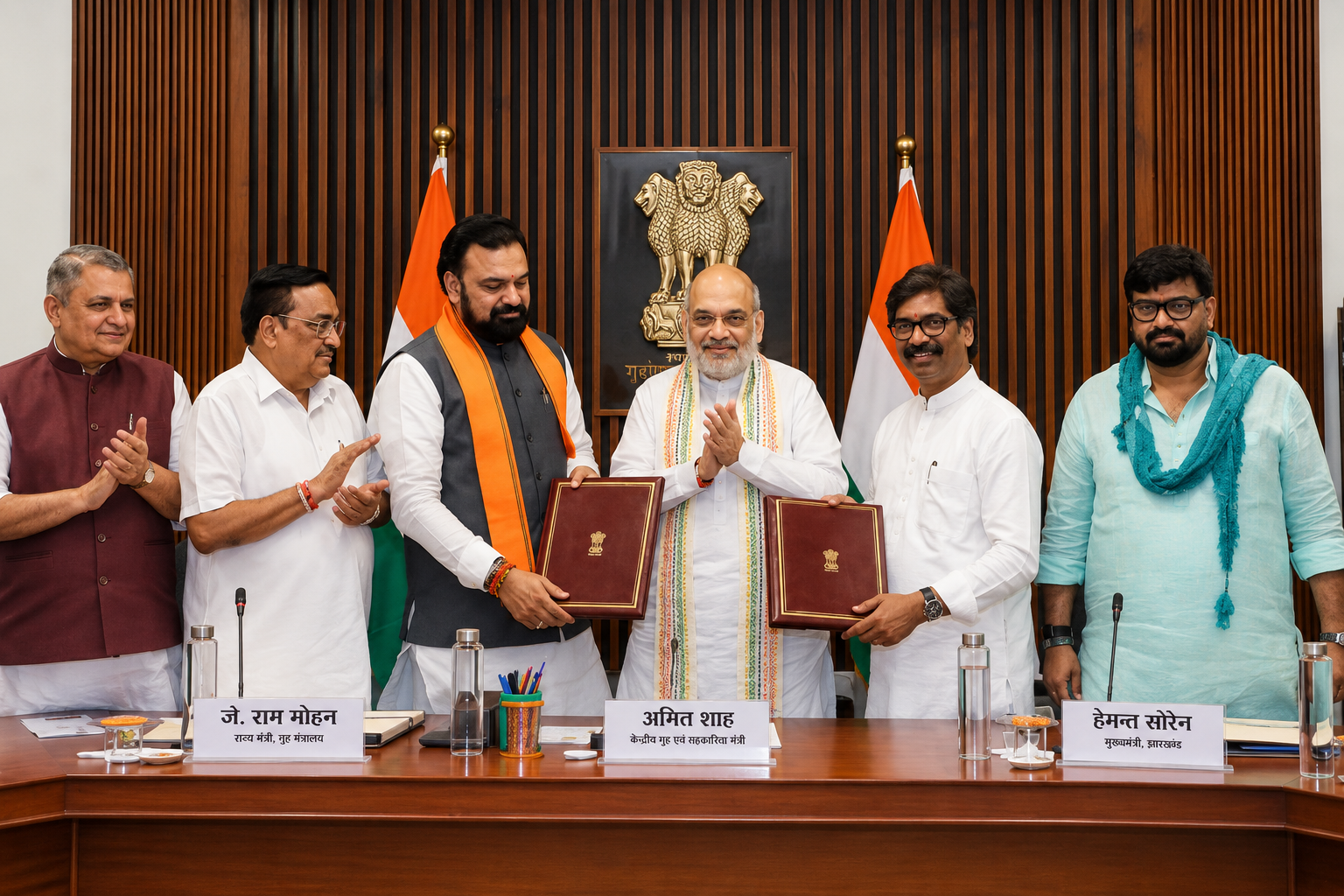
Bihar and Jharkhand have reached an important agreement aimed at resolving a water-sharing dispute involving the Sone River, bringing an end to a disagreement that has continued for nearly 25 years. The agreement was formalised through a memorandum of understanding in New Delhi.
The pact provides for the sharing of 7.75 million acre-feet of Sone River water between the two states. Officials and central government representatives said the agreement could have significant benefits for farmers and communities dependent on the river for irrigation and drinking water.
Water-sharing disputes have traditionally been a major challenge between Indian states, particularly where rivers cross administrative boundaries. Differences over allocation can affect agricultural planning, drinking-water supplies and regional development.
The Bihar-Jharkhand agreement is therefore being viewed as an example of how dialogue can help resolve complicated inter-state issues. Union Home Minister Amit Shah welcomed the development and said cooperation between states could help address long-pending disputes.

The agreement is expected to be particularly relevant for farming communities. Reliable access to irrigation water can help farmers plan agricultural activities and reduce uncertainty during periods of irregular rainfall.
Jharkhand Chief Minister Hemant Soren and Bihar Chief Minister Samrat Choudhary were among the leaders associated with the agreement, along with senior officials from the Centre and the two states.
The Sone River has historically played an important role in the agricultural economy of the region. Earlier agreements involving the river date back several decades, making the latest settlement significant from both administrative and development perspectives.
The agreement also highlights the importance of cooperative federalism in India. As states face increasing pressure over water resources, successful negotiations could provide a model for resolving other inter-state disputes.
For residents and farmers in Bihar and Jharkhand, the key expectation is that the agreement will translate into better water management, improved irrigation and more dependable drinking-water supplies.
