
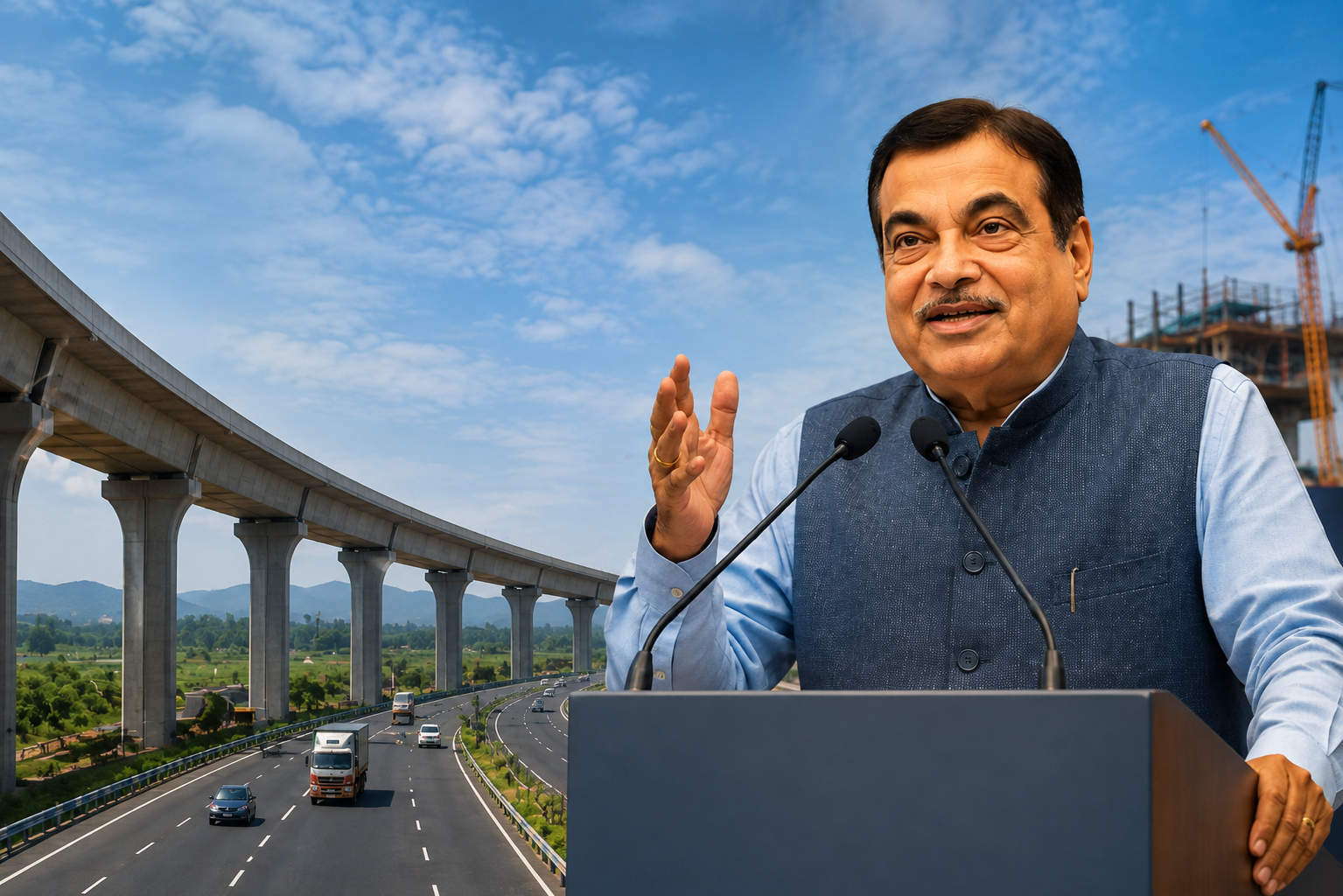
New Delhi: Union Road Transport and Highways Minister Nitin Gadkari continues to focus on improving India’s highway infrastructure, with construction quality, modern technology and timely completion emerging as key priorities for the ministry.
At a recent infrastructure conference in New Delhi, Gadkari stressed that India needs high-quality infrastructure while keeping projects cost-effective. He said there should be no compromise on construction standards and highlighted the importance of stronger accountability among contractors and consultants working on major highway and tunnel projects.
The minister has also raised concerns about poorly prepared Detailed Project Reports (DPRs). According to Gadkari, inadequate surveys, geological information and project planning can contribute to delays, cost increases and safety problems. The ministry is therefore assessing the performance of contractors as well as consultants involved in preparing DPRs, with future tender eligibility potentially linked to their past performance.
Gadkari has placed particular emphasis on India’s challenging Himalayan terrain. Tunnel and bridge construction in mountainous regions can be affected by landslides, extreme weather and difficult logistics. The government is examining technologies such as advanced Tunnel Boring Machines, precast construction, improved monitoring systems and early-warning mechanisms to make such projects safer and more efficient.

The minister’s infrastructure agenda also includes modernising toll collection. In May, Gadkari launched a barrier-free Multi-Lane Free Flow tolling system at Mundka-Bakkarwala in the National Capital Region. The system is designed to allow vehicles to pass through toll points without stopping, using electronic technology to improve traffic flow and reduce fuel consumption.
Meanwhile, several major highway projects are moving forward across the country. In Odisha, the National Highways Authority of India recently received 17 bids for a ₹8,300.79-crore coastal highway project connecting Rameshwar and Paradeep. The 160-kilometre project is expected to improve connectivity to important tourist destinations and generate employment during construction.
Gadkari’s approach reflects the government’s broader effort to build faster, safer and technologically advanced transport infrastructure. With increasing investment in highways, tunnels, bridges and electronic tolling, India’s road network is undergoing a significant transformation.
