
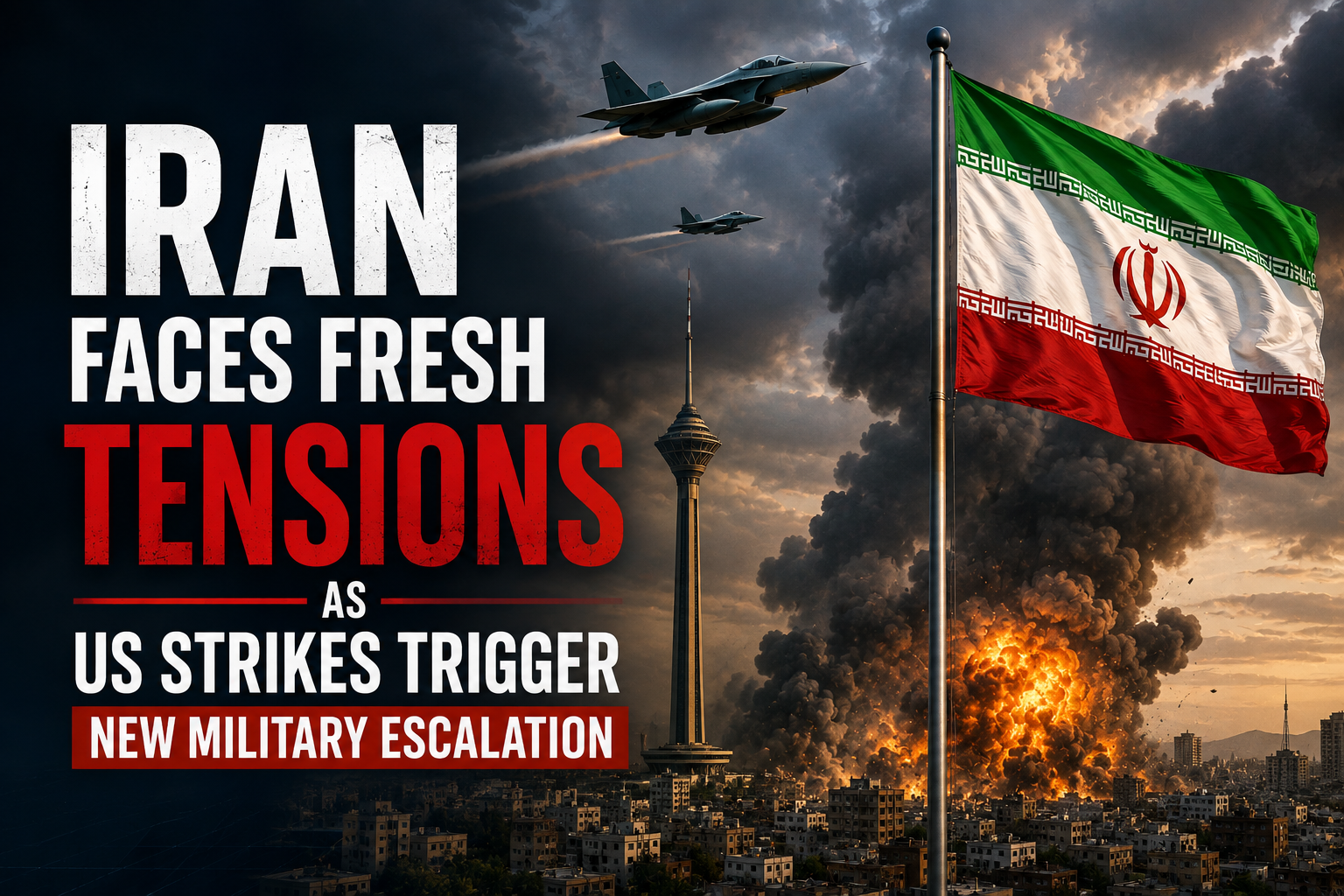
New Delhi: Iran has again become a major focus of international attention after renewed military exchanges with the United States ended a month-long period of relative calm. The latest escalation has raised concerns about regional security, oil supplies and the future of diplomatic efforts surrounding Iran’s nuclear programme.
The United States carried out strikes on targets in Iran earlier this week, with Washington saying the attacks were connected to military threats in and around the strategically important Strait of Hormuz. Iran responded with missile and drone attacks targeting US-linked military positions in the region.
The renewed fighting has also increased pressure on shipping through the Strait of Hormuz, one of the world’s most important energy routes. Reports of attacks involving commercial vessels have added to concerns among international shipping companies. A Saudi-flagged oil tanker was reportedly struck near the strait, with two crew members killed, according to shipping company Bahri.
The latest developments have also created uncertainty around Iran’s nuclear programme. The International Atomic Energy Agency has warned that it urgently needs access to Iranian nuclear facilities to verify the country’s nuclear material. The agency says the lack of information about Iran’s enriched uranium stockpile represents a serious proliferation concern.

Iran, however, has maintained that it is not seeking nuclear weapons and has criticised what it describes as politically motivated pressure from the United States and international institutions. Iranian officials say cooperation with the IAEA continues through established channels, although Tehran has demanded special arrangements for access to facilities damaged by military attacks.
Despite the renewed violence, Iran’s President Masoud Pezeshkian has indicated that Tehran remains open to diplomacy. Speaking at the Shanghai Cooperation Organisation summit in Bishkek, he said Iran would return to the June ceasefire framework if the United States also honours its commitments.
For India and other countries dependent on stable energy markets, the situation remains important. Any prolonged disruption around the Strait of Hormuz could affect international oil prices, shipping costs and broader economic conditions.
With military tensions rising and diplomatic channels still uncertain, Iran remains at the centre of a rapidly changing Middle Eastern crisis.
