
Table of Contents
UAE financial markets ended the week on a positive note as new economic data showed stronger growth in the country’s non-oil private sector. The improvement in business activity supported investor confidence and helped both Dubai and Abu Dhabi stock markets record gains.
The S&P Global UAE Purchasing Managers’ Index (PMI) increased to 55.3 in August from 52.7 in July, indicating a stronger expansion in private-sector business activity. The improvement was supported by increases in output and new business, highlighting continued momentum in the UAE economy.
UAE Business News: Key Headlines
- UAE PMI rises: The private-sector PMI climbed to 55.3 in August.
- Dubai stocks gain: Dubai’s main index increased by 0.7%.
- Abu Dhabi rises: The Abu Dhabi benchmark gained 0.5%.
- Market value increases: UAE-listed companies added more than Dh14 billion in market capitalisation.
- Real estate leads: Property companies were among the key contributors to the market gains.
- Non-oil economy expands: Business activity continues to show resilience beyond the energy sector.
Dubai Market Moves Higher
The Dubai Financial Market index rose 0.704%, with several major companies contributing to the advance.
Emaar Properties gained around 2.2%, while Air Arabia rose 2.1%. The airline’s shares received attention after it announced an increase in flights between Sharjah and Bangkok.

The gains suggest that investors remain interested in UAE companies even as global markets continue to deal with uncertainty surrounding interest rates, energy prices and geopolitical developments.
Abu Dhabi Also Records Gains
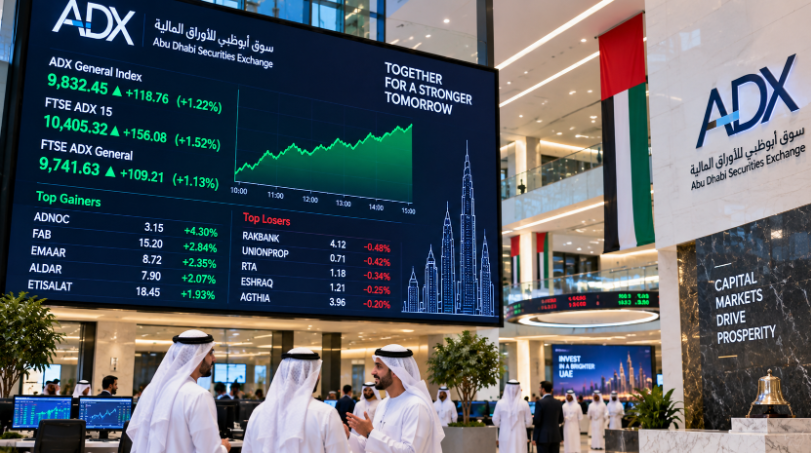
The Abu Dhabi Securities Exchange benchmark increased approximately 0.5% during the latest trading session.
Large financial companies helped support the index. First Abu Dhabi Bank gained 1.5%, while Abu Dhabi Commercial Bank rose 1.2%.
Aldar Properties also increased after completing mortgage financing for an off-plan property purchase under a recently introduced Abu Dhabi real-estate framework. The development could make financing for certain off-plan purchases more convenient and potentially support activity in the property market.
Private Sector Remains Strong
The rise in the UAE PMI is particularly important because the country’s long-term economic strategy focuses on expanding sectors beyond oil and gas.
Tourism, aviation, real estate, financial services, technology, logistics and manufacturing have become increasingly important parts of the UAE economy.
A stronger PMI indicates that companies are experiencing higher levels of business activity and new orders. Continued growth could encourage businesses to expand investment, increase hiring and introduce new services.
Global Challenges Remain
Despite the positive economic indicators, UAE businesses continue to operate in an uncertain global environment.
Oil prices, regional security concerns, international trade conditions and global interest rates can all influence business confidence. The UAE’s position as a major international aviation, tourism and financial hub also means that regional developments can have an impact on investment and travel.
Web Story Highlights
UAE private-sector activity strengthens in August.
PMI rises from 52.7 to 55.3.
Dubai stocks gain more than 0.7%.
Abu Dhabi market rises around 0.5%.
UAE-listed companies gain more than Dh14 billion in market value.
Real estate and financial stocks support the markets.
The latest figures provide a positive signal for the UAE economy as businesses enter the final months of 2026. Investors will continue watching corporate earnings, property activity, oil prices and global economic conditions for further signs of growth.
