
Table of Contents
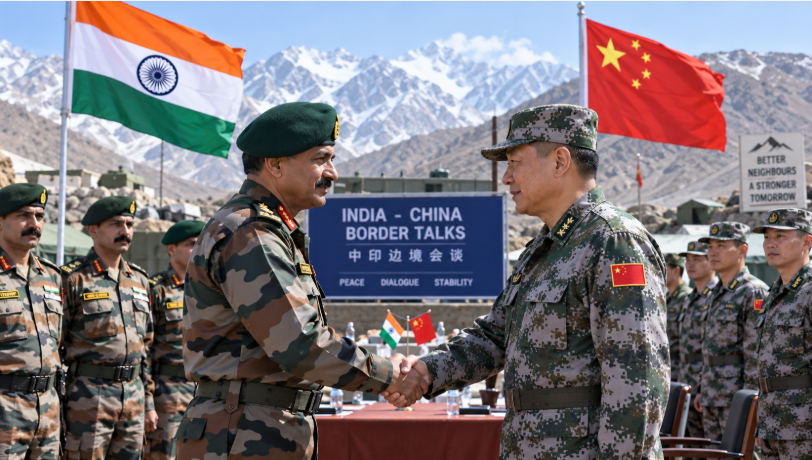
India and China are preparing for another round of military-level discussions aimed at reducing tensions along their disputed Himalayan border. The planned talks come shortly after a high-level meeting between India’s National Security Adviser Ajit Doval and Chinese Foreign Minister Wang Yi in Beijing.
The upcoming Corps Commander-level meeting is expected to focus on maintaining peace along the Line of Actual Control (LAC), improving communication between the two militaries and exploring further steps toward de-escalation. The development is being closely watched because the India-China border dispute has remained an important security issue for several years.
India-China Border: Key Headlines
- Military talks planned: Indian and Chinese Corps Commanders are expected to meet in the Northeast.
- Doval-Wang talks: The meeting follows recent high-level diplomatic discussions in Beijing.
- LAC tensions remain: Both countries continue efforts to manage unresolved border issues.
- Hotline discussions: New communication channels between military commands are reportedly being considered.
- De-escalation focus: Both sides want to prevent renewed confrontation along sensitive border areas.
Why the Talks Matter
The India-China boundary remains one of Asia’s most important unresolved territorial disputes. Military tensions increased significantly after confrontations in eastern Ladakh, leading both countries to deploy large numbers of troops and equipment in the region.
Since then, diplomatic and military channels have been used to reduce tensions and prevent further incidents.

The latest talks indicate that both governments continue to see direct communication as important. Military-to-military dialogue can help commanders clarify movements, avoid misunderstandings and establish mechanisms for managing unexpected incidents.
New Communication Channels
One significant aspect of the latest discussions is the possibility of strengthening direct communication between military commands.
New hotlines have reportedly been considered for Army commands in cities including Kolkata and Lucknow, while Joshimath has been discussed as a possible border meeting point. Such mechanisms could improve communication during periods of tension.
Diplomatic Engagement Continues
The military discussions are taking place alongside broader diplomatic engagement.
Ajit Doval and Wang Yi have been involved in efforts to improve India-China relations, with border stability remaining a central issue. Maintaining peace along the LAC is important not only for security but also for the wider relationship between the two Asian powers.
Improved relations could potentially create greater opportunities for economic and diplomatic cooperation, although major differences remain.
Regional Importance
The India-China border issue has implications beyond the two countries. Both India and China are major Asian powers with significant economic and military influence.
Any escalation could affect regional stability, trade and diplomatic relations with neighbouring countries.
For India, maintaining secure borders remains a major national priority. For China, stable relations with India can help reduce tensions on its western frontier while allowing greater focus on other strategic priorities.
What to Watch
The upcoming Corps Commander-level meeting will be closely monitored for indications of progress on disengagement and de-escalation.
Officials will also watch whether new communication mechanisms can be established and whether the two sides can maintain peace in sensitive border areas.
Web Story Highlights
India and China prepare for another military-level meeting.
Corps Commanders are expected to discuss the LAC.
Talks follow the Doval-Wang diplomatic meeting.
New military hotlines could improve communication.
De-escalation remains a major priority.
The continuation of military and diplomatic dialogue represents an important effort to manage India-China tensions. While major differences remain unresolved, sustained communication could help prevent fresh confrontations and support longer-term stability along the border.
