
Table of Contents
Top Headlines
- UK business news today: Britain’s economy faces fresh pressure from higher energy prices, inflation concerns and uncertainty surrounding interest rates.
- The Bank of England is widely expected to keep its interest rate at 3.75% at its September 17 meeting, although markets have increased bets on a possible rate hike later this year.
- Goldman Sachs now expects a 25-basis-point Bank of England rate increase in November 2026, while Citi forecasts further tightening.
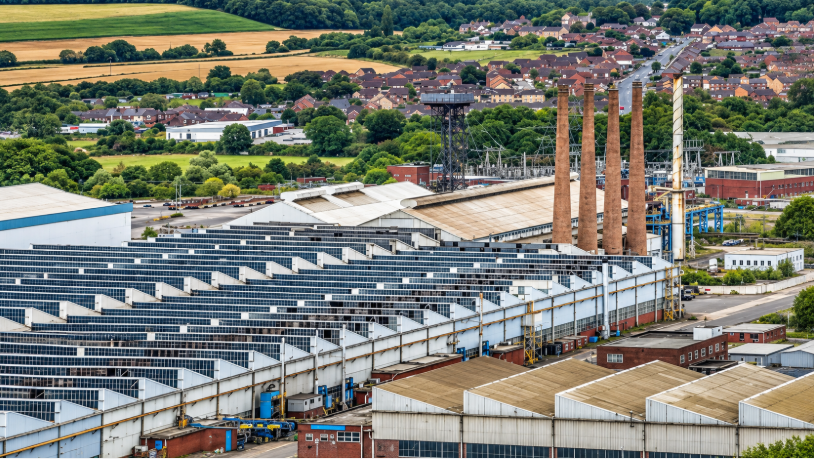
- The UK government plans to acquire Speciality Steel UK, protecting more than 1,300 jobs across South Yorkshire and the West Midlands.
- Rising oil prices above $100 a barrel are increasing concerns about inflation and business costs.
- UK business confidence remains mixed, with growth improving in some sectors but consumer spending, construction and property markets remaining weak.
- Artificial intelligence continues to attract investment, while businesses are increasingly using AI to improve productivity and automate operations.
- The FTSE 100 finished higher despite global technology-market volatility, with investors moving toward defensive companies.
UK Business News Today
The UK business environment is entering an important period as companies deal with higher energy costs, inflation uncertainty, borrowing expenses and changing consumer demand. The latest UK business news today is dominated by the Bank of England’s upcoming policy decision, government intervention in the steel industry and renewed volatility in global financial markets.
Recent Bank of England business intelligence suggests that economic conditions are improving in some sectors, particularly business services and manufactured exports. However, significant weaknesses remain in consumer spending, construction and residential and commercial property.
Bank of England Interest Rate Decision in Focus
The Bank of England is expected to keep its interest rate at 3.75% when policymakers meet on September 17. However, higher energy prices and stronger-than-expected inflation have changed the outlook for monetary policy.
Financial markets are now assigning a greater probability to a rate increase later in 2026. Goldman Sachs expects the Bank to raise rates by 0.25 percentage points in November, while Citigroup expects one increase later this year and another in early 2027.

The situation remains uncertain. Bank of England Governor Andrew Bailey has indicated that policymakers want clearer evidence that higher energy costs are creating persistent domestic inflation before supporting another increase.
For UK businesses, interest rates are particularly important because higher borrowing costs can affect investment, property purchases, expansion plans and working capital.
Government Moves to Acquire Speciality Steel UK
One of the biggest UK business developments is the government’s decision to work toward acquiring Speciality Steel UK.
Business Secretary Jonathan Reynolds said the move is intended to protect more than 1,300 jobs at sites in Rotherham, Stocksbridge, Brinsworth and Wednesbury. The company had previously been part of Sanjeev Gupta’s Liberty Steel group and entered administration last year.
The government decided that a proposed private-sector takeover by Norwegian steel company Blastr Green Steel could not provide sufficient long-term stability and value for money.
The move highlights the strategic importance of Britain’s steel industry, particularly for automotive, aerospace and defence manufacturing.
UK Businesses Face Higher Energy Costs
Energy prices have become a major concern for companies across Britain. Global oil prices have risen sharply following attacks affecting Saudi energy infrastructure, increasing fears that higher fuel costs could feed into inflation.
The Bank of England’s latest business survey found that input costs and consumer prices are continuing to edge higher, particularly for energy-intensive businesses. Companies are attempting to control costs through efficiency improvements while passing some higher expenses on to customers.
Manufacturers are particularly exposed to energy and raw-material costs, while transport, hospitality and retail businesses are also vulnerable to higher fuel prices.
Consumer Spending Remains Weak
UK consumer spending continues to show signs of pressure. The Bank of England reported that consumer spending growth remains moderate and is largely driven by prices rather than significant increases in purchasing volumes.
Supermarkets are reporting that customers are increasingly choosing cheaper brands, while demand for expensive products such as furniture remains weak.
Hospitality businesses are also facing challenging trading conditions, with household budgets and economic uncertainty affecting discretionary spending.
AI Becomes Important for UK Businesses
Artificial intelligence remains an important investment area for British companies. Businesses are increasing technology spending, including AI, while manufacturers and warehouse operators are exploring automation to manage higher labour costs.
The UK Office for National Statistics has also been tracking the growing use of AI among British businesses, highlighting its increasing role in business operations and productivity.
At the same time, global technology stocks have recently faced volatility following calls from leading AI executives for a more cautious approach to rapid AI development.
UK Exports and Business Investment
There are some positive signals for Britain’s export sector. The Bank of England reported that goods export growth has improved after a period of flat or falling volumes. Demand has been particularly strong for data-centre components, energy-related products and defence equipment.
Investment intentions have also improved slightly, although they remain below normal levels. Infrastructure projects, ports and airports are seeing increased investment, while high borrowing costs continue to restrict activity in construction and property.
What to Watch Next
The biggest issues for UK businesses over the coming weeks will be the Bank of England interest-rate decision, energy prices, inflation, consumer spending, business investment and the performance of the UK stock market.
