
Table of Contents
Top Headlines
- China and the United States are preparing for another Xi-Trump meeting, with artificial intelligence, advanced chips, trade and technology expected to be important issues.
- China’s industrial output increased 5.2% year-on-year in August, supported by high-tech manufacturing and the AI-related technology boom.
- Chinese consumer spending remained weak, with retail sales rising only 0.4% in August, while property investment continued to decline.
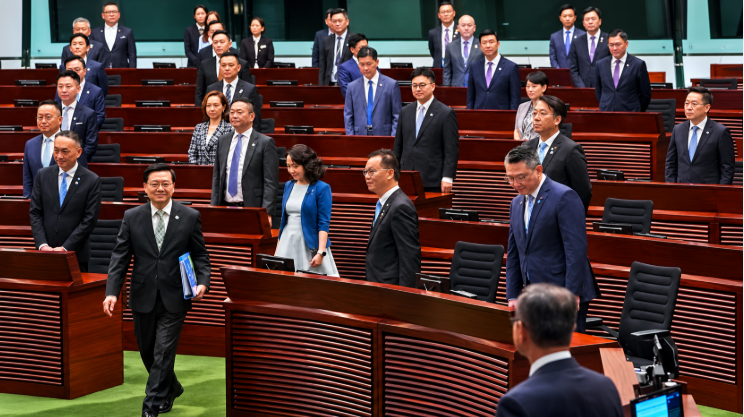
- Hong Kong has unveiled its first five-year development plan, placing greater emphasis on technology, innovation, higher education and finance.
- China is strengthening its domestic AI capabilities as competition with the United States over advanced technology intensifies.
- Chinese Foreign Minister Wang Yi met Iranian Foreign Minister Abbas Araghchi in Beijing and called for international waterways and energy supply chains to remain secure.
- China has introduced new border-control rules allowing travel restrictions in certain national-security and technology-related cases.
- The Beijing Xiangshan Forum is bringing international attention to China’s defence and security policies ahead of the expected US-China summit.
China News Today: Xi-Trump Meeting and AI Rivalry
China-US relations remain at the centre of the latest China news as President Xi Jinping and US President Donald Trump prepare for another meeting in Washington. Artificial intelligence is expected to be an important part of the discussions, alongside trade, advanced semiconductor technology and technology restrictions.
Reuters reports that Washington and Beijing continue to disagree over access to advanced chips, alleged technology copying and rules governing AI development. US officials have accused Chinese companies of using technology-transfer techniques to reproduce American AI capabilities, while Beijing has rejected those accusations.
The two countries are also considering how to manage potential military risks associated with increasingly powerful AI systems. Experts have called for communication mechanisms and human oversight to reduce the possibility of AI-related incidents escalating during a crisis.
China’s AI Industry Expands
China’s technology sector continues to develop despite restrictions on access to some advanced semiconductor technologies. Companies including DeepSeek, Moonshot AI and Z.ai are developing increasingly capable AI systems, while Chinese policymakers are promoting domestic computing infrastructure and AI research.

Recent reporting also highlights the growing importance of domestic AI chips. Chinese technology companies and research institutions are increasingly using locally developed processors as Beijing seeks greater technological self-sufficiency.
The AI competition has therefore become both an economic and strategic issue for China, particularly as Washington considers additional technology restrictions.
China Economy Shows Mixed Signals
China’s latest economic data presents a mixed picture. Industrial production grew 5.2% in August, accelerating from July and exceeding market expectations. High-tech manufacturing, industrial robots and lithium-ion battery production were among the areas supporting factory activity.
However, consumer demand remained comparatively weak. Retail sales increased only 0.4% year-on-year in August, while property investment fell by 19.9%. Fixed-asset investment also declined, highlighting continuing pressure on domestic demand.
China’s second-quarter GDP growth was reported at 4.3%, below the government’s annual growth target range of 4.5% to 5%. The latest figures are likely to maintain pressure on policymakers to support household consumption and address problems in the property sector.
Hong Kong Unveils First Five-Year Plan
Hong Kong has announced its first five-year development plan, setting out priorities for technology, innovation, higher education, finance and infrastructure.
Chief Executive John Lee said Hong Kong intends to increase domestic spending on innovation from 1.63% of GDP in 2024 to around 3% after 2030. The Northern Metropolis project near Shenzhen is a central part of the plan and is intended to create hundreds of thousands of jobs while expanding technology and university facilities.
The plan also seeks to strengthen Hong Kong’s position as an international financial centre and offshore renminbi hub while developing new technology and tourism industries.
China and Iran Discuss Regional Security
Chinese Foreign Minister Wang Yi met Iranian Foreign Minister Abbas Araghchi in Beijing on September 16. Wang called for efforts to reopen the Strait of Hormuz and maintain secure international waterways and stable energy supply chains.
China has also called for the United States and Iran to return to diplomatic efforts, saying prolonged conflict does not serve the interests of the countries involved or the wider international community.
Developments around the Strait of Hormuz are particularly important for China because disruptions to global energy transportation can affect oil prices, manufacturing costs and international supply chains.
New China Travel and Border Rules
China has also introduced new border-control regulations that allow authorities to restrict some citizens from leaving the country in cases involving national security or technology-related violations.
According to AP, the rules can apply to certain technology import and export violations as well as activities considered harmful to national security. The regulations also provide authorities with powers to restrict the departure of individuals under certain circumstances.
Chinese authorities say the measures are designed to prevent illegal activity and protect national security, while outside experts have raised questions about the broad wording of some provisions.
China Trade and Global Relations
China continues to expand its economic relationships across Asia and other emerging markets. Recent BRICS discussions have included artificial intelligence, digital sovereignty, trade and technology cooperation. Xi Jinping has promoted greater cooperation among developing countries in AI and other strategic technologies.
Meanwhile, Beijing continues to face trade and technology tensions with the United States and Europe, making diversification of export markets and domestic technological development important parts of China’s economic strategy.
