
Table of Contents
Top Headlines
- Belgium latest news: Belgium is dealing with important developments involving the economy, European Union policy, security, transport and international relations.
- Belgian economy: The National Bank of Belgium expects the country’s economy to rebound by around 0.3% in the third quarter of 2026.
- Brussels protest: A protest is scheduled in Brussels on September 18, with traffic adaptations expected along the route from 8:00 AM to 2:30 PM.
- Brussels Airport: The airport handled more than 2.5 million passengers and 71,000 tonnes of cargo in August 2026, according to airport authorities.
- EU border system: Belgium is among several European countries seeking additional time for implementation of the EU Entry/Exit System (EES) biometric border checks.
- Russian frozen assets: Belgium’s Council of State ruled that the country’s treasury department lacked legal authority in a case involving frozen Russian BCS Bank assets held at Euroclear, although the ruling did not order the funds to be released.
- European security: Belgium has backed Germany’s response to an alleged Russian-linked drone attack attempt and called for stronger European security measures.
- Defence recruitment: Belgium has opened thousands of new military positions as the country expands its defence capabilities.
Belgium Latest News Today
Belgium is attracting attention today with developments spanning the economy, Brussels transport, European affairs, border controls, aviation and national security. As the country remains an important centre of European Union institutions, developments in Brussels are also closely connected to wider EU policy discussions.
Belgian Economy Shows Signs of Recovery
Belgium’s economic outlook is being closely monitored as businesses and policymakers assess growth, inflation and international conditions. The National Bank of Belgium’s latest Business Cycle Monitor projected that the Belgian economy would rebound by approximately 0.3% in the third quarter of 2026.
The outlook comes as European economies continue to deal with energy-price pressures and geopolitical uncertainty. The European Central Bank also raised its key interest rates by 25 basis points on September 10, with the National Bank noting that the conflict in the Middle East continues to generate inflation pressures.
For Belgian households and companies, interest rates, energy costs and consumer demand remain important factors influencing the economic outlook.

Brussels Protest and Traffic Changes
Residents and visitors in Brussels should be aware of a planned protest on Friday, September 18. The City of Brussels says traffic will be adapted along the protest route between 8:00 AM and 2:30 PM.
The traffic measures could affect commuters and motorists travelling through central parts of the city. People travelling through Brussels are advised to allow additional time and check local transport information before beginning their journey.
Brussels Airport Reports Strong Passenger and Cargo Activity
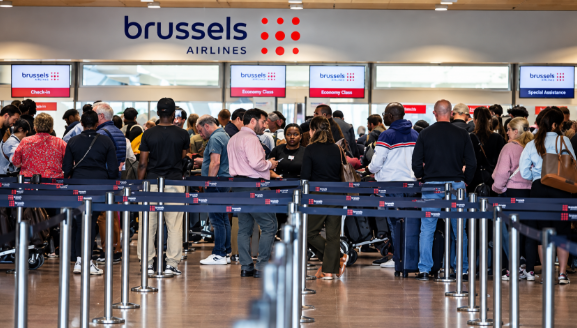
Brussels Airport continues to play an important role in Belgium’s economy and international connectivity. Airport authorities reported that the facility handled more than 2.5 million passengers and 71,000 tonnes of cargo during August 2026.
The airport has also reported strong growth for the first half of the year, with 11.7 million passengers and 420,000 tonnes of cargo handled during the first six months of 2026, representing increases of 3.6% and 8.3% respectively compared with the previous year.
Cargo remains particularly significant because Brussels Airport is an important European hub for pharmaceuticals, e-commerce and other specialised shipments.
Belgium and EU Border Checks
Belgium is among several countries that have asked for additional time to implement the European Union’s Entry/Exit System (EES). The digital border system requires biometric registration for many non-EU travellers entering or leaving the Schengen area.
Reports say Belgium, Germany, France, Italy, Greece, Malta, the Netherlands, Portugal and Switzerland have sought additional time because of concerns about queues and operational challenges at busy airports.
The issue is important for international travellers because the new system changes how non-EU citizens’ border movements are recorded.
Court Ruling on Frozen Russian Assets
A major legal and financial development involves Russian assets frozen in Belgium. Belgium’s Council of State ruled that the treasury department did not have the legal authority to make a particular decision concerning frozen assets belonging to Russia’s BCS Bank held at Euroclear in Brussels.
The court did not order the release of the assets. However, the ruling could have wider implications for similar cases if Belgium changes its legal framework or other parties challenge treasury decisions.
Euroclear holds approximately €200 billion in frozen Russian assets, according to Reuters. The assets have become an important issue in European discussions over possible financial support for Ukraine.
Belgium Focuses on Defence and Security
Security remains another important issue for Belgium. The country has expressed support for Germany after Berlin attributed a failed drone attack attempt involving Leipzig/Halle Airport to Russian security services. Belgian Foreign Minister Maxime Prévot said Belgium supported Germany’s response and called for stronger European security measures.
Belgium is also expanding military recruitment. Euractiv reported that the country has opened 3,100 new military positions, reflecting broader European efforts to strengthen defence capabilities.
Energy and European Policy
Belgium is also following wider EU debates over energy security, Russia, defence and economic competitiveness. Brussels remains a central location for discussions involving the European Commission, European Parliament and EU member states.
The European agenda this week includes discussions on European defence readiness, foreign interference, Russia-related security issues, Ukraine and critical infrastructure.
