
Table of Contents
Berlin elections latest news: Berlin’s state election has produced a major shift in the city’s political landscape, with the Left Party (Die Linke) emerging as the strongest party in the preliminary result. The election took place on September 20, 2026, and the outcome is attracting attention in France and across Europe because of its potential implications for Germany’s domestic politics and the wider Franco-German relationship.
Berlin Elections Latest News – Top Headlines
- Die Linke finished first in Berlin with about 25.7% of the vote.
- The party more than doubled its previous 2023 result.
- The CDU finished second with about 18.8%.
- The AfD received around 16.3%.
- The Greens recorded about 14.3%.
- The SPD received approximately 12.1%.
- The previous CDU-SPD governing coalition no longer has a majority.
- Coalition negotiations will now determine how Berlin’s next government is formed.
- Housing affordability was one of the central issues during the campaign.
- The result is being closely followed in France because of its potential impact on German national politics and European cooperation.
Berlin Election 2026: Die Linke Emerges as Largest Party
The biggest Berlin elections latest news today is the preliminary result showing Die Linke as the largest party in the Berlin House of Representatives election. According to the preliminary result reported by German public broadcaster Tagesschau, the party received 25.7%, compared with 12.2% in the 2023 election.
Elif Eralp, Die Linke’s leading candidate, now has the possibility of leading coalition negotiations. However, the party does not have enough seats to govern alone, meaning discussions with other parties will be necessary.
The election therefore moves into a new phase as parties consider possible governing combinations.

CDU and SPD Face Significant Changes
The election also resulted in substantial losses for the parties that previously governed Berlin. The CDU, which had been the largest party in the previous governing arrangement, came second with approximately 18.8%.
The SPD received about 12.1%, placing it behind the Greens and AfD in the preliminary figures. The result means the previous CDU-SPD coalition no longer has enough support to continue with a majority.
The final composition of the Berlin government will depend on coalition negotiations and the final allocation of seats.
Housing Was a Major Election Issue
Housing was one of the most important subjects during the Berlin election campaign. Berlin has experienced significant pressure on rents and housing availability, with approximately 85% of households renting their homes.
Reuters reported before the election that advertised rents had nearly doubled since 2014 and that Berlin estimates it will need around 211,000 additional homes by 2040.
Die Linke’s campaign placed particular emphasis on housing affordability. Eralp has supported proposals involving the transfer of large private housing portfolios into public ownership, although the proposal faces financial and political questions.
Coalition Talks Become the Next Focus
With no single party holding a majority, coalition negotiations are now central to the Berlin election latest news.
Potential combinations involving Die Linke, the SPD and Greens are being discussed in German media. However, the exact governing arrangement will depend on negotiations between the parties and their policy positions.
The result means Berlin could experience a significant change in its governing coalition after the final parliamentary composition is confirmed.
Berlin Election and Germany’s National Politics
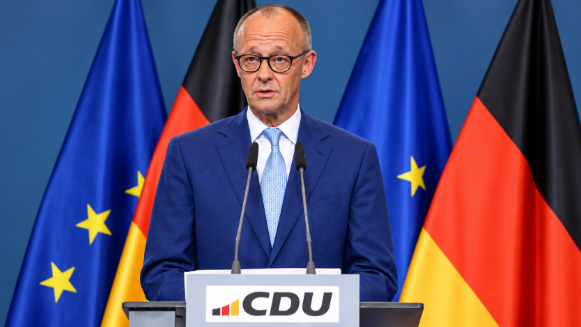
The Berlin vote is also important beyond the city itself. Chancellor Friedrich Merz’s CDU suffered losses in Berlin while also facing a difficult result in Mecklenburg-Western Pomerania, where the CDU fell below the threshold required to remain in the state parliament.
The two state elections have therefore generated discussion about the strength of Germany’s federal governing coalition and its ability to implement planned economic and political reforms.
Merz has said he intends to continue with his government’s reform agenda despite the election setbacks.
Why France Is Watching the Berlin Election
The Berlin elections France latest news angle is linked to the broader importance of German politics for the European Union. France and Germany have traditionally played major roles in European policy-making, particularly on economic policy, defence and EU institutional questions.
French newspaper Le Monde reported that political changes in Germany are being watched closely in Brussels because a weakened German government could affect European decision-making. The publication specifically highlighted the importance of the Franco-German partnership as Europe prepares for major negotiations, including the EU’s 2028–2034 budget.
The Berlin election itself does not determine Germany’s federal government, but its result forms part of a broader series of regional political developments.
Election Participation and Official Results
Berlin’s election authorities reported that voter participation stood at 58.2% at 4 p.m. on September 20. Final official results and the complete distribution of seats remain important for determining the next government.
Readers should distinguish between preliminary projections, preliminary results and the final certified result.
What Happens Next in Berlin?
The immediate focus will be on coalition discussions. Parties will need to determine whether they can agree on housing, transport, public services, finances and other major issues.
Further announcements from the leading parties are expected as negotiations progress. The final governing coalition will also influence how Berlin approaches its housing shortage and other major city challenges.
