
Table of Contents
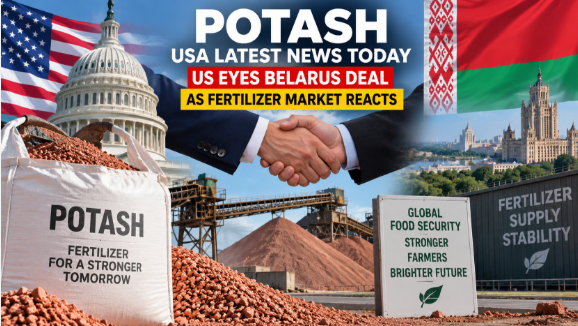
The latest potash USA news today is focused on a proposed major deal between the United States and Belarus. President Donald Trump said on September 21 that the US is working on an agreement to purchase potash from Belarus at prices he said would be substantially lower than what American buyers currently pay for Canadian supplies. The announcement immediately drew attention across the fertilizer and agriculture markets.
Potash is an important fertilizer nutrient used by farmers to support crop growth and yields. The United States relies heavily on imports, making international supply, transportation and pricing important issues for American agriculture.
Potash USA Latest News: Belarus Deal Under Discussion
Top Headlines
- US is discussing a potential large potash purchase from Belarus.
- President Trump said the proposed Belarusian supply could be cheaper than Canadian potash.
- Details on the deal’s volume, timing and final terms have not been announced.
- Canada currently supplies the majority of potash used by US farmers.
- Fertilizer companies reacted to the announcement in US markets.
- Nutrien, Mosaic and Intrepid Potash shares moved lower after the news.
- Potash remains an important input for American corn, soybean and wheat producers.
US Depends Heavily on Imported Potash
The United States has a significant dependence on imported potash. Recent industry analysis indicates that Canada accounts for roughly 90% of US potash imports, while imports make up most of America’s potash requirements. This makes Canadian supply an important part of the US agricultural supply chain.
A potential Belarus agreement could therefore introduce another major supplier into the US market. However, the practical impact would depend on the final terms of any agreement, including quantities, transportation arrangements, pricing and regulatory requirements.

Why Belarus Potash Matters
Belarus is one of the world’s major potash producers. According to figures cited by Anadolu Agency from Natural Resources Canada, Belarus produced about 12.1 million tonnes of potash in 2024, representing approximately 15.9% of global production. Canada produced nearly 25 million tonnes that year.
The possibility of increased Belarusian supply is significant because the global potash market has been affected by geopolitical developments and trade restrictions in recent years.
Potash Prices and US Farmers
The latest potash price USA data also provides important context. DTN reported that the average US retail price for potash was approximately $494 per ton during the first full week of September 2026. The price was about 1% higher than the previous month and 1% higher than the same period a year earlier.
For farmers, fertilizer prices can have a direct effect on production costs. Potash is especially important for crops such as corn, soybeans and wheat, where adequate potassium nutrition supports plant development and crop performance.
A larger supply of lower-cost potash could potentially affect market pricing, but the final effect will depend on whether a US-Belarus agreement is actually completed and how much product enters the American market.
Fertilizer Stocks React to Potash News
The announcement also affected publicly traded fertilizer companies.
Reports on September 21 showed declines in shares of major fertilizer producers following Trump’s statement. Nutrien, Mosaic and Intrepid Potash all moved lower during trading as investors considered the possibility of additional Belarusian supply entering the market.
The market reaction reflects uncertainty over how additional supply could affect potash prices and the business outlook for major producers.
Canada Remains a Major Supplier
Canada continues to play a central role in the US potash market. Nutrien has said Canada supplies more than 80% of the potash used on US farms, while other industry estimates put Canada’s share of US potash imports even higher.
Natural Resources Canada data cited in recent reporting shows that the United States imported approximately $4.2 billion worth of potash in 2025, highlighting the scale of the trade relationship.
The proposed Belarus deal comes amid continuing US-Canada trade tensions, adding another layer of uncertainty to North America’s fertilizer supply chain.
What Happens Next?
There are still several unanswered questions surrounding the proposed potash agreement. The US and Belarus have not publicly released detailed information about the potential purchase volume, delivery schedule or final pricing arrangements.
Transportation could also be an important issue. Belarusian potash exports have faced logistical and sanctions-related restrictions, meaning a new US supply arrangement would require workable routes for moving the fertilizer to American buyers.
Until more details become available, the announcement remains a potential agreement rather than a completed supply contract.
