
Table of Contents
Top Headlines
- Australia’s share market has fallen to its lowest level since June as rising oil prices increase inflation concerns.
- The ASX 200 was down around 0.8% on September 15, while Brent crude moved above US$107 a barrel.
- Energy Minister Chris Bowen will travel to Saudi Arabia next week as Australia seeks to protect fuel supplies amid the escalating Middle East conflict.
- Australia imports about 84% of its petroleum products, leaving the country exposed to global energy disruptions.
- The Reserve Bank of Australia continues to face pressure from persistent inflation and elevated energy costs.
- Australia’s economy grew 0.4% in the June quarter and was 2.1% higher over the year.
- The RBA has warned that inflation is unlikely to return to the middle of its 2–3% target range until early 2028.
- The federal government is facing debate over migration levels and their effect on housing, infrastructure and economic growth.
- Australian Federal Police chief Krissy Barrett has called for a national conversation about organised crime and drug-related violence.
- Pauline Hanson has faced criticism over remarks concerning Indigenous Australians and subsequently offered a qualified apology.
Australia News Today
Australia is facing a busy political and economic day on September 15, 2026, with rising energy prices, inflation, financial-market volatility and organised crime among the leading national issues. Prime Minister Anthony Albanese’s government is also dealing with debates over migration, housing and the country’s economic outlook.
Oil Prices Put Pressure on Australian Economy
One of the biggest Australia news stories today is the sharp increase in global oil prices. Brent crude has moved above US$107 a barrel, while Australia’s ASX 200 has fallen to its lowest level since June. Investors are concerned that higher energy prices could create another wave of inflation.
The situation is particularly important for Australia because the country imports a large proportion of its refined petroleum products. Energy Minister Chris Bowen has announced plans to travel to Saudi Arabia next week for discussions with Saudi Energy Minister Prince Abdulaziz bin Salman. The talks are expected to focus on energy security and the stability of fuel supplies.
RBA Keeps Inflation in Focus
The Reserve Bank of Australia remains under pressure to control inflation. In its August economic outlook, the RBA said inflation remains too high and is not expected to return to the middle of its 2–3% target range until early 2028.

The central bank also said earlier interest-rate increases are still working through the economy. Spending is expected to slow, while unemployment is forecast to rise gradually.
The outlook means Australian households could continue facing elevated borrowing costs and living expenses, particularly if energy prices remain high.
Australian Economy Shows Growth
Despite the difficult global environment, official national accounts show that Australia’s economy expanded 0.4% in the June quarter. Annual growth reached 2.1%, while the economy grew 2.4% during the 2025–26 financial year.
Treasury said dwelling investment had improved, incomes were growing and there was a strong pipeline of business investment. The government described the result as evidence of economic resilience despite international uncertainty.
However, economists remain concerned about the combination of inflation, interest rates, energy costs and weaker household spending.
Migration and Housing Debate Continues
Migration policy is another major political issue. The federal Labor government is considering changes to migration settings, but state Labor premiers and business groups have warned that sharp reductions could create labour shortages and weaken economic growth.
Housing remains closely connected to the migration debate. Australia’s population growth has increased demand for homes, infrastructure and services, while construction has struggled to keep pace in several major cities.
The government therefore faces a difficult balancing act between supporting economic growth and addressing pressure on housing affordability and infrastructure.
Organised Crime and Drug Violence Raise Concern
Australian Federal Police Commissioner Krissy Barrett has called for a national discussion about the growing threat posed by organised crime and drug trafficking.
Barrett said transnational criminal groups are becoming increasingly sophisticated and are using technologies such as artificial intelligence to evade law enforcement. More than 17 tonnes of narcotics have reportedly been seized in the Pacific region during 2026, almost four times the amount seized in 2025.
The AFP chief warned that drug trafficking is connected to street violence, exploitation of young people and broader national-security risks.
Political Debate Intensifies
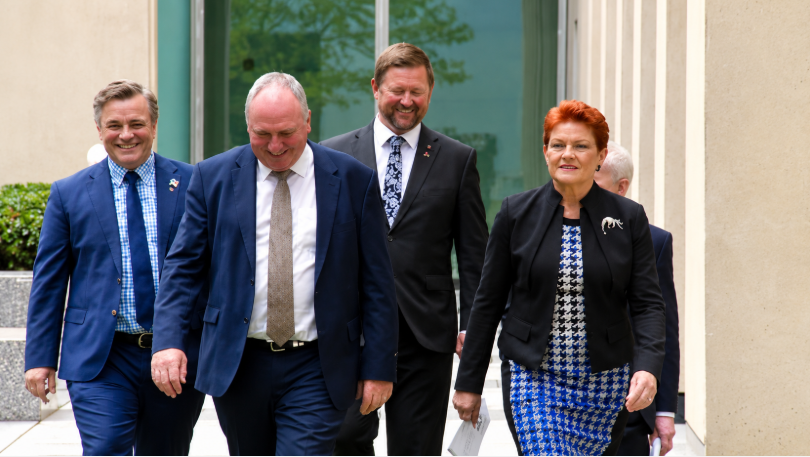
Australian politics has also been dominated by controversy involving One Nation leader Pauline Hanson. Hanson offered a qualified apology after remarks concerning Indigenous Australians attracted criticism.
The controversy has renewed debate over political language, Indigenous relations and the responsibilities of federal politicians. ABC reported that Indigenous Australians Minister Malarndirri McCarthy continued to call for a stronger apology.
Australian Markets Under Pressure
The ASX’s decline demonstrates how international events are increasingly affecting Australian investors. At around 1:40pm AEST, the ASX 200 was down 0.8%, while the Australian dollar was trading around US71.25 cents.
Mining and financial stocks were among the sectors weighing on the market, while higher oil prices increased concerns about inflation and future interest rates.
