
Table of Contents
Top Headlines
- Radha Ashtami 2026 is being observed on Saturday, September 19.
- The festival is celebrated on the Shukla Paksha Ashtami of the Hindu month of Bhadrapada.
- Radha Ashtami marks the traditional appearance day of Radha Rani.
- The Ashtami tithi began on September 18 and ends on September 19 afternoon, with exact timings varying slightly by location.
- Devotees are observing fasts, offering prayers and performing Radha-Krishna puja.
- Barsana, Vrindavan and other parts of the Braj region are witnessing special religious activities.
- Authorities in Barsana have made extensive arrangements for the large number of devotees expected for the festival.
- Special buses, parking areas, medical camps, CCTV cameras and crowd-control measures have been arranged around the major pilgrimage areas.
Radha Ashtami 2026
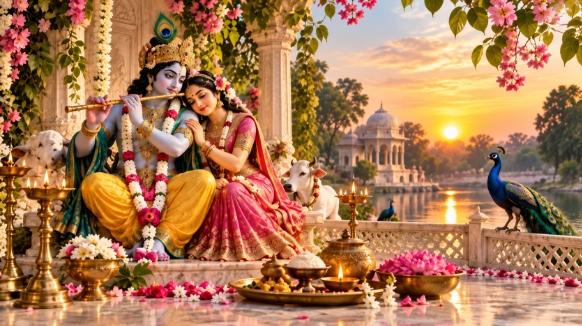
Radha Ashtami, also known as Radhashtami or Radha Jayanti, is being celebrated across India on September 19, 2026. The festival is particularly important in the Braj region of Uttar Pradesh, including Barsana, Vrindavan, Mathura and Nandgaon.
According to Hindu tradition, the festival commemorates the appearance of Radha Rani, who is revered in Vaishnava traditions as an embodiment of divine love and devotion. Radha Ashtami traditionally falls 15 days after Janmashtami.
Radha Ashtami Date and Tithi
In 2026, Radha Ashtami falls on Saturday, September 19. The Ashtami tithi begins on September 18 afternoon and continues until September 19 afternoon. Because Hindu festivals are generally determined using the prevailing tithi and local sunrise calculations, the festival date is observed on September 19.
For example, one Panchang calculation gives the Ashtami tithi from around 1:00 PM on September 18 to 3:26 PM on September 19, while the exact puja window varies by location.

Radha Ashtami Puja Muhurat
Devotees traditionally perform Radha Rani puja during the Madhyahna period, or around midday. For Palghar, Maharashtra, a Panchang calculation lists the Radha Ashtami Madhyahna period from approximately 11:19 AM to 1:46 PM on September 19. Local timings can differ depending on the city.
Devotees may begin the day with a bath and a devotional sankalp before decorating the puja area. Radha-Krishna idols or images can be offered flowers, fruits, sweets, incense and other traditional offerings.
Radha Ashtami Vrat and Puja
Many devotees observe a fast on Radha Ashtami as part of their religious practice. The specific fasting method varies among families and traditions.
Common devotional activities include:
- Taking an early morning bath.
- Cleaning and decorating the home temple.
- Offering flowers to Radha Rani and Krishna.
- Reciting Radha-Krishna prayers and devotional songs.
- Performing aarti.
- Offering sattvik bhog or prasad.
- Visiting a Radha-Krishna temple where possible.
Fasting rules and the timing for breaking the fast can vary according to local Panchang calculations and individual religious traditions, so devotees generally follow the practice observed by their family or temple.
Special Celebrations in Barsana
Barsana remains one of the major centres of Radha Ashtami celebrations. Large numbers of devotees are expected to visit the town for darshan at the Radha Rani temple, also known as Shri Ji or Ladli Ji Temple.
The administration has divided the festival area into seven zones and 20 sectors for crowd management. Around 3,000 police personnel have reportedly been deployed, along with CCTV cameras, drones, watchtowers and lost-and-found centres.
The arrangements also include 160 special UPSRTC buses, multiple parking sites, holding areas, barriers and medical camps. Officials have prepared these facilities to manage the expected crowds and assist pilgrims during the celebrations.
Radha Ashtami in Vrindavan and Mathura
Apart from Barsana, Radha Ashtami is observed with devotion in Vrindavan, Mathura and Nandgaon. Temples conduct special prayers, devotional programmes, bhajans and offerings.
The festival is an important occasion for devotees who follow Radha-Krishna traditions and provides an opportunity for families and temple communities to participate in religious activities.
