
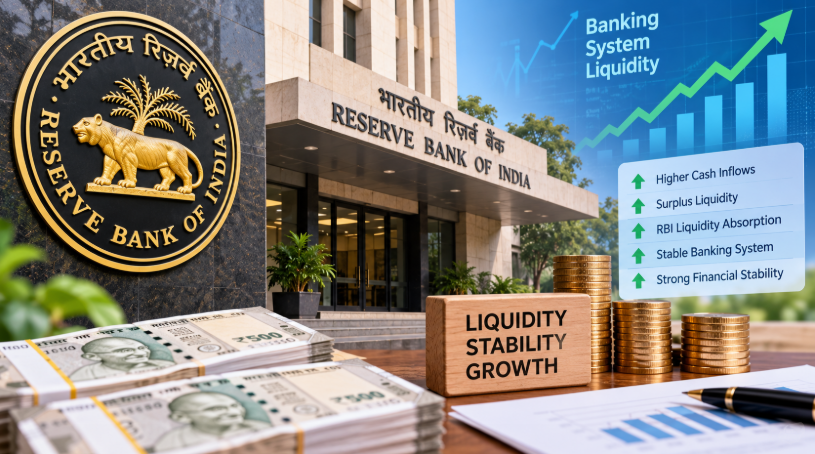
The Reserve Bank of India (RBI) is taking additional steps to manage surplus liquidity in the banking system as a large amount of cash remains available with financial institutions. The central bank has announced a 30-day variable rate reverse repo (VRRR) auction worth ₹7 lakh crore, scheduled for September 7, as part of its efforts to absorb excess funds from banks.
The move comes after banking-system liquidity reached exceptionally high levels. According to recent reports, the surplus stood at around ₹10.3 lakh crore as of September 3. The increase has been linked partly to foreign-currency deposits raised under a special RBI scheme and subsequently swapped with the central bank.
The RBI’s latest measure is notable because longer-duration liquidity operations can help prevent excessive cash from remaining in the financial system for an extended period. When banks have large surplus funds, short-term market rates can come under downward pressure and move below the central bank’s policy repo rate.
The latest VRRR auction also includes an early redemption option, a feature designed to make the facility more attractive to banks. Financial institutions have historically shown limited enthusiasm for locking funds into longer-duration operations because of uncertainty about their own liquidity requirements.

The RBI is therefore attempting to balance two objectives: keeping sufficient liquidity available to support the economy while preventing an excessive surplus from distorting short-term money-market conditions.
For businesses, banks and investors, liquidity management can have important consequences. Banking liquidity influences money-market rates, lending conditions, bond markets and the broader financial environment. A carefully managed liquidity position can help maintain stability while allowing credit to continue flowing to productive sectors.
The central bank’s action is also being watched against the wider economic backdrop. India’s financial system has experienced significant changes in recent months, including movements in foreign-currency deposits and capital flows. These developments can affect the amount of rupee liquidity available to domestic banks.
Market participants will closely monitor the September 7 auction to assess how much liquidity banks are willing to place with the RBI. Participation levels could provide an indication of banks’ preferences for holding surplus funds versus deploying them into loans, investments or other assets.
The RBI’s approach demonstrates that liquidity management remains an important part of monetary policy even when the central bank is not making a change to its main policy rate. Instead of relying solely on interest-rate adjustments, the RBI can use market operations to influence the amount of money circulating through the banking system.
For investors, the development is another important indicator to watch alongside inflation, bond yields, currency movements and credit growth. The effectiveness of the latest VRRR operation could influence market expectations about liquidity conditions during the coming weeks.
As India’s economy continues to expand and financial markets become increasingly active, maintaining stable liquidity conditions will remain an important priority for the RBI and the country’s banking sector.
