
Table of Contents
China remains at the centre of major international developments, with President Xi Jinping’s recent India visit, trade relations, artificial intelligence, technology security and new overseas-travel rules attracting global attention. Beijing is also seeking stronger cooperation with emerging economies while managing sensitive relations with the United States and neighbouring countries.
Top Headlines
- China news today: Beijing says it is ready to work with India to address economic and trade concerns in a balanced manner.
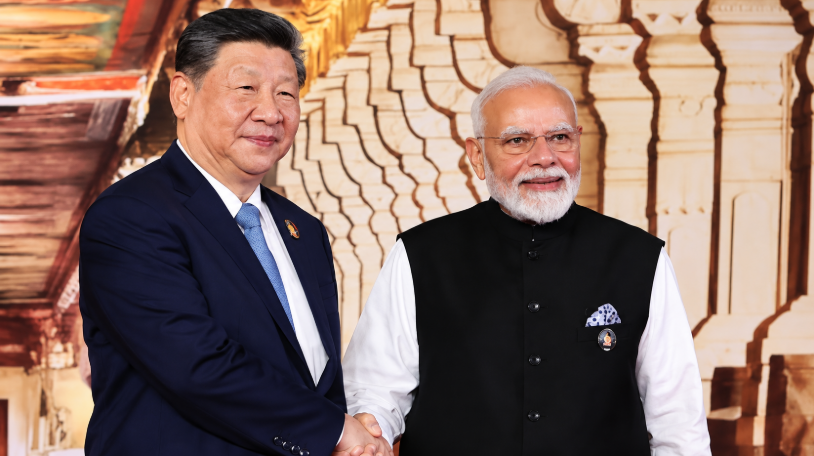
- Chinese President Xi Jinping and Indian Prime Minister Narendra Modi held talks during the BRICS Summit in New Delhi, focusing on border stability, trade and stronger bilateral relations.
- Xi called for greater BRICS cooperation and urged emerging economies to strengthen unity and cooperation.
- China has introduced new rules tightening restrictions on overseas travel for certain government employees, Communist Party officials, state-owned enterprise workers and people in sensitive sectors.
- Beijing has pushed back against U.S. concerns over China’s artificial-intelligence development, warning against confrontation over AI technology.
- Chinese AI company DeepSeek has reportedly appointed a new chief financial officer as the company considers its future financing and possible IPO plans.
- Chinese technology and semiconductor companies continue to attract investor attention as Beijing promotes domestic AI and advanced-technology development.
- China is also focusing on trade, advanced manufacturing, renewable energy and technology cooperation with BRICS members.
China News Today: Latest Updates
China’s latest news is being shaped by a combination of diplomatic engagement, economic policy, technology competition and domestic security measures. President Xi Jinping’s recent participation in the BRICS Summit in India has provided an important platform for Beijing to strengthen relationships with major emerging economies.
At the same time, China continues to face strategic competition with the United States, particularly over artificial intelligence, semiconductors, technology exports and national security.
Xi Jinping and Modi Discuss China-India Relations
One of the biggest international stories involving China is the meeting between Xi Jinping and Narendra Modi in New Delhi.

The Chinese and Indian leaders discussed ways to improve bilateral relations after years of tension following the 2020 border clash. India said the two sides agreed to strengthen economic and transport links and work toward maintaining peace along the disputed Himalayan border.
The meeting was particularly significant because it was Xi’s first visit to India in seven years. Both governments have indicated that differences should be managed through dialogue rather than allowing them to become larger disputes.
China has also expressed willingness to address trade and economic concerns with India. Beijing said it wants to work with New Delhi to find balanced solutions that benefit businesses and people in both countries.
China Strengthens BRICS Role
Xi Jinping also used the BRICS Summit to call for stronger cooperation among developing and emerging economies.
Chinese official sources said Xi urged BRICS members to strengthen unity and play a more constructive role in global affairs. He described BRICS cooperation as an important platform for emerging-market countries.
China’s role in BRICS is significant because the grouping has become an important forum for discussions about trade, finance, technology, energy and global governance.
The summit also highlighted cooperation in areas such as artificial intelligence, smart manufacturing and digital development.
New Overseas Travel Restrictions
A major domestic development is China’s implementation of new rules governing overseas travel by certain categories of citizens.
The rules, which took effect on September 15, introduce tighter controls for some civil servants, Communist Party members, state-owned enterprise employees and people working in sensitive technological sectors. Violations can potentially lead to fines and restrictions on leaving the country.
The Financial Times reported that the regulations are linked to Beijing’s efforts to protect state secrets, advanced technology and skilled human resources.
The changes have attracted international attention because they could affect how some professionals and their families travel internationally.
China and the Global AI Competition
Artificial intelligence remains another major issue in China’s relationship with the United States.
Beijing recently rejected U.S. claims that China’s AI development represents a threat, arguing that confrontation and hostile competition could damage international efforts to establish effective AI governance.
China is investing heavily in domestic AI models, semiconductor manufacturing, data infrastructure and advanced computing. Companies such as DeepSeek have become prominent examples of China’s growing AI ambitions.
DeepSeek has reportedly appointed a new CFO as it prepares for potential future financing and possible public-market plans, highlighting the growing commercial importance of China’s AI industry.
China’s Technology and Manufacturing Push
China continues to promote domestic technological development as it faces restrictions on access to some advanced foreign technologies.
AI chips, electric vehicles, batteries, robotics, telecommunications and advanced manufacturing remain key areas of investment. Chinese companies are also expanding internationally, increasing competition with American, European, Japanese and South Korean manufacturers.
The technology sector is expected to remain one of the most important parts of China’s economic strategy over the coming years.
Economy and Trade Outlook
China’s economic outlook remains closely connected to domestic consumption, exports, property-sector conditions and international trade.
Improved relations with India could create additional opportunities for bilateral commerce, although significant trade imbalances and market-access concerns remain.
China is also continuing to deepen economic relationships with BRICS members and other developing economies as geopolitical competition reshapes global supply chains.
