
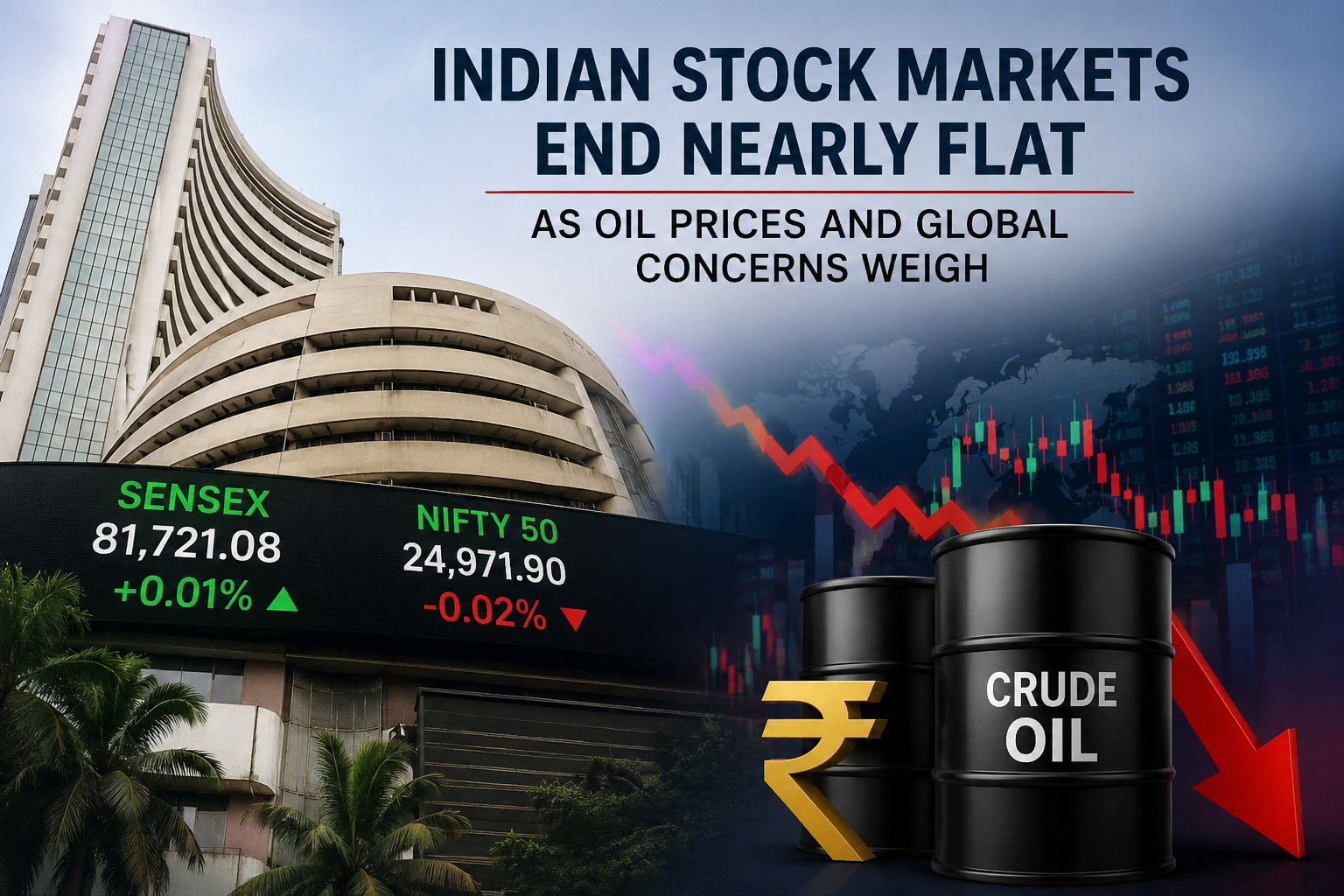
Indian stock markets ended Tuesday’s trading session with only limited movement as rising crude oil prices and concerns over global interest rates offset optimism created by India’s strong economic growth figures.
The Sensex closed at 76,944.28, declining 12.99 points, while the Nifty 50 ended at 24,055.80, down 24.60 points. The relatively small declines reflected a cautious trading environment.
Investors were balancing positive domestic economic indicators against concerns emerging from international markets. India’s latest GDP figures showed 7.8% growth during the first quarter, offering an encouraging signal about domestic economic activity.
However, higher crude oil prices remained a major concern for investors. Brent crude was trading above $91 per barrel, while West Texas Intermediate crude was also higher. Sustained increases in oil prices can affect India’s import bill and put pressure on inflation, the rupee and corporate profitability.

The market also remained sensitive to expectations surrounding interest rates in major economies. Any changes in global monetary policy can influence foreign investment flows into emerging markets such as India.
Information technology and some consumer-related stocks provided support during the session, preventing a sharper decline in the benchmark indices. At the same time, several sectors, including healthcare, pharmaceuticals, real estate and automobiles, came under pressure.
Broader market indices performed less strongly than the headline benchmarks, showing that selling pressure extended beyond a handful of major companies.
The day’s trading demonstrated the conflicting forces currently influencing Indian equities. On one side, strong domestic economic growth and continued consumption provide reasons for optimism. On the other, expensive crude oil and global financial uncertainty remain significant risks.
Investors will now closely watch international oil prices, upcoming economic data, corporate earnings and global interest-rate decisions. Market volatility could remain elevated if geopolitical tensions continue affecting energy markets.
For long-term investors, the latest session underlines the importance of looking beyond daily market movements and focusing on broader economic and corporate trends
