
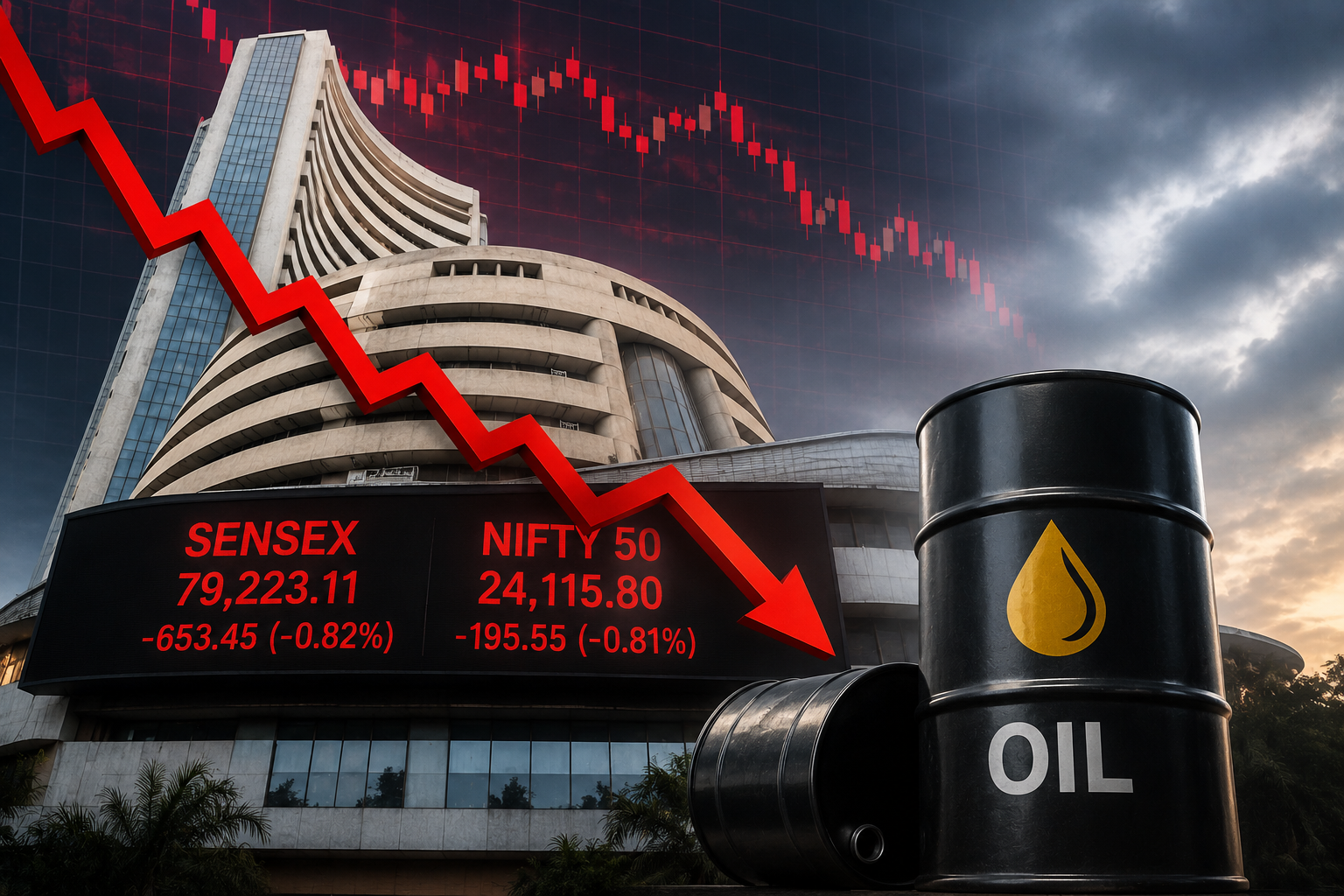
Mumbai: Indian equity markets came under renewed pressure on Wednesday as escalating tensions between the United States and Iran pushed crude oil prices higher and weakened investor confidence. The Sensex and Nifty both ended lower for the third consecutive session, reflecting growing concerns about inflation, energy costs and global financial conditions.
The BSE Sensex closed at 76,570.35, falling 373.93 points, or 0.49%. The Nifty 50 ended at 23,914.45, down 141.35 points, or 0.59%. The Nifty remained below the important 24,000 level after touching an intraday low of 23,786.80.
The main pressure on markets came from developments in West Asia. Renewed US-Iran military tensions caused international crude prices to rise sharply, raising concerns for oil-importing economies such as India. Brent crude climbed toward the mid-$90s per barrel, increasing fears that prolonged disruption could raise India’s import bill and add to domestic inflationary pressures.
Selling was particularly strong in automobile and information technology stocks. Eicher Motors, Bajaj Auto and Mahindra & Mahindra were among the notable Nifty losers. Wipro also declined sharply, while the Nifty IT index came under pressure as investors reacted to weak global technology sentiment.

The broader market also remained weak, with both mid-cap and small-cap indices ending lower. However, some energy-related shares provided support. Coal India emerged as one of the stronger performers, helped by expectations of improved earnings from higher coal prices.
Despite the market decline, domestic economic indicators remain relatively strong. India’s economy recorded 7.8% growth in the April-June quarter, providing a positive backdrop for investors. However, analysts are increasingly focused on whether higher oil prices could eventually affect inflation, corporate costs and economic growth.
The Indian rupee remained relatively stable despite the external pressure, closing around ₹94.97 against the US dollar.
Investors are now expected to closely monitor crude oil prices, developments in West Asia, global bond yields and central-bank policy signals. Continued geopolitical uncertainty could keep Indian markets volatile in the near term.
